Welcome to SING Lab
Advancing manufacturing through AI-driven innovations in additive manufacturing and materials design.
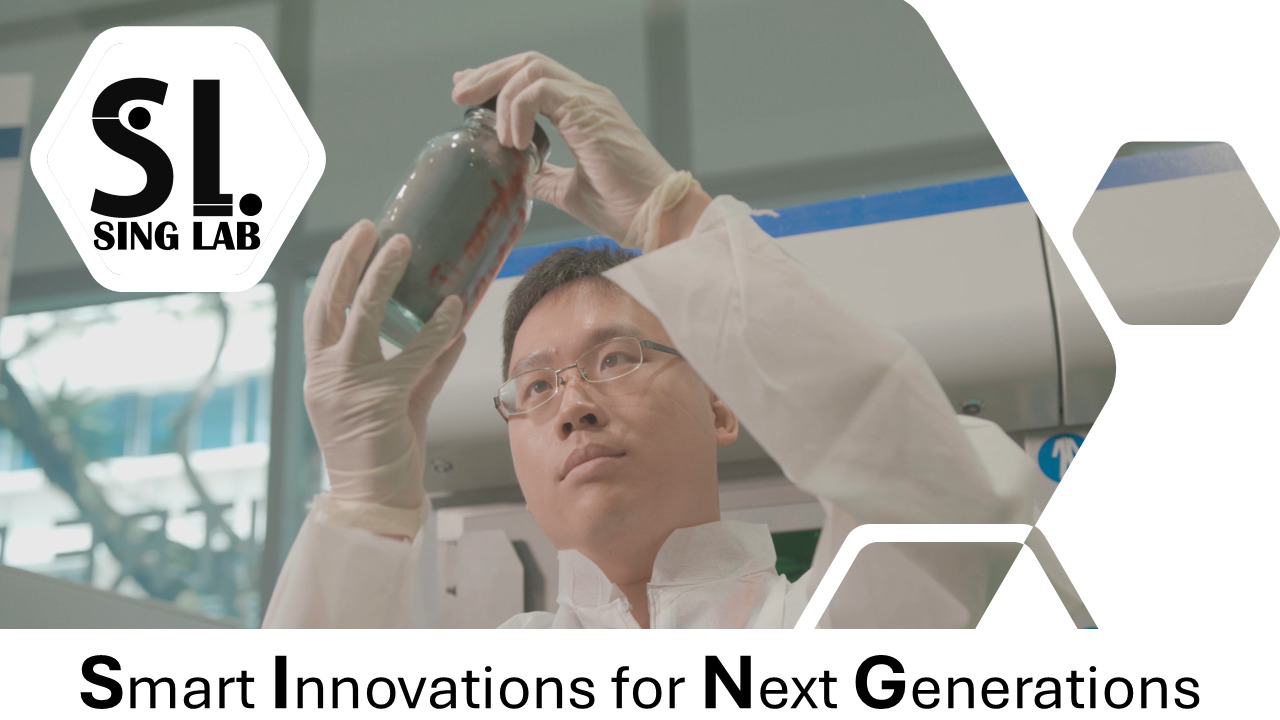
About the Lab
Dr. Sing Swee Leong is an Assistant Professor at the Department of Mechanical Engineering, National University of Singapore (NUS). His research focuses on integrating artificial intelligence with additive manufacturing for Industry 4.0, emphasizing material design and process control.
The SING Lab explores cutting-edge technologies to revolutionize manufacturing processes, making them smarter, more efficient, and sustainable.
Research Themes
-
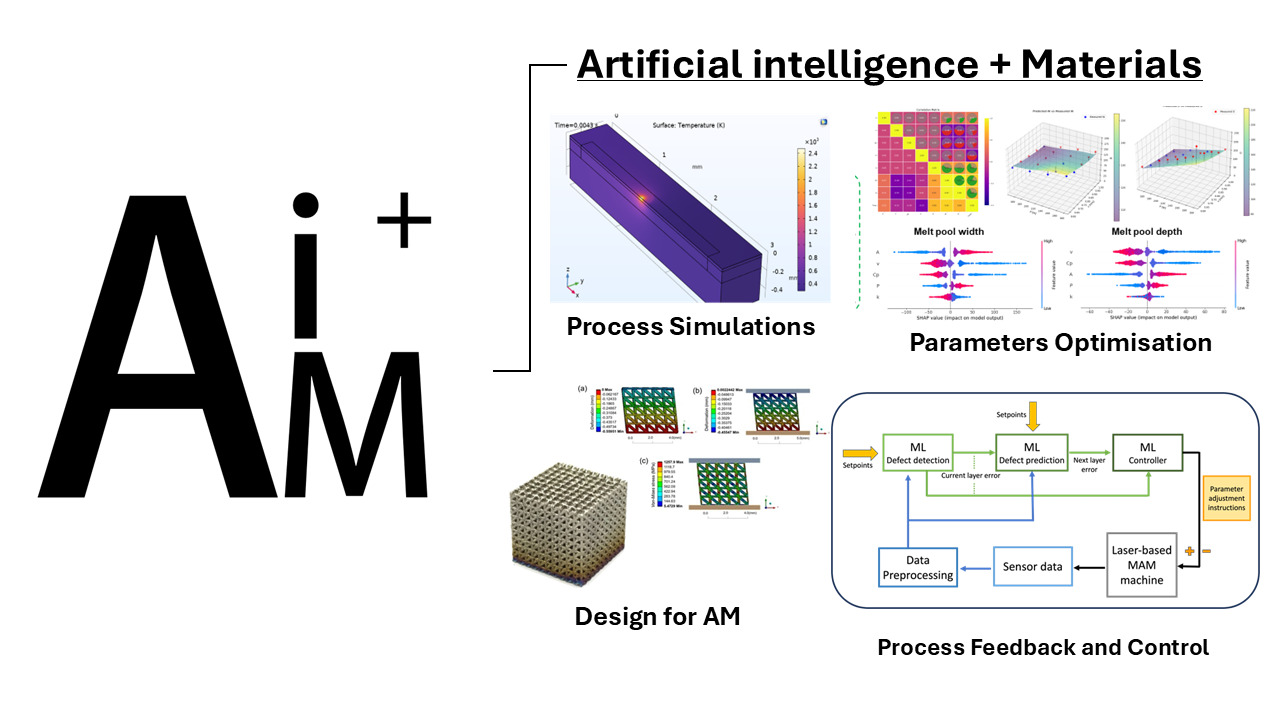
AI + Manufacturing
-
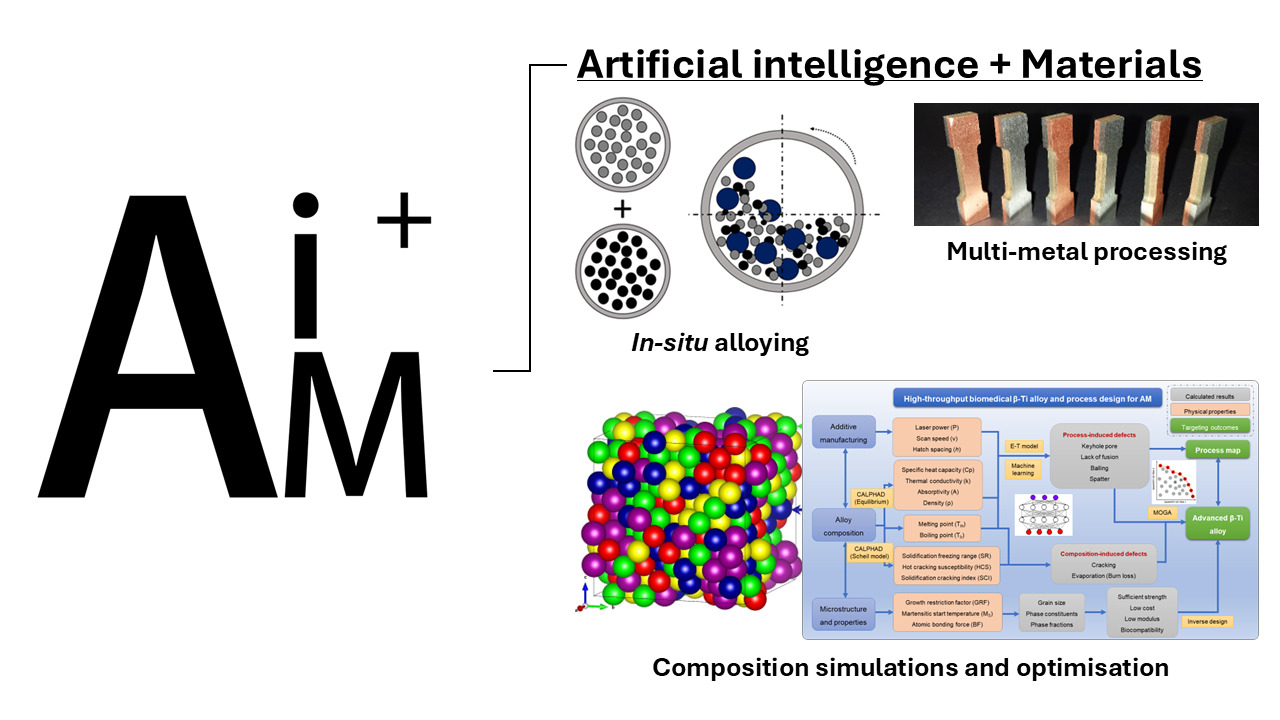
AI + Materials
Team
Principal Investigator
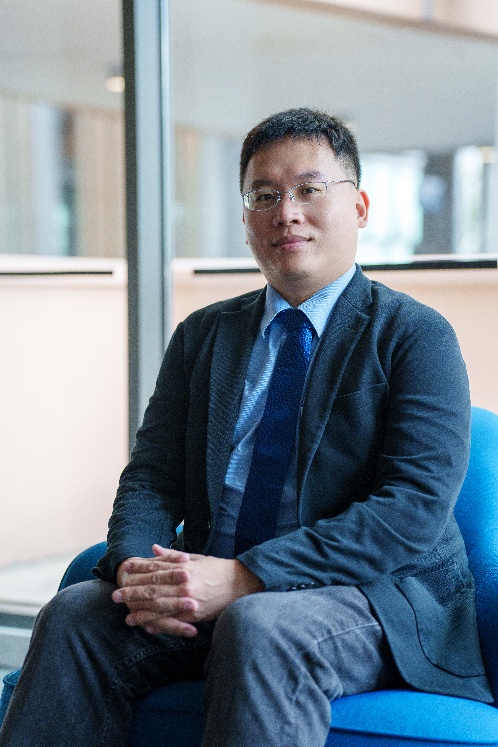
Dr Sing Swee Leong
Dr Sing Swee Leong is an Assistant Professor at the Department of Mechanical Engineering, National University of Singapore (NUS), Singapore. Prior to joining NUS, he was a Presidential Postdoctoral Fellow at the School of Mechanical and Aerospace Engineering and Singapore Centre for 3D Printing, Nanyang Technological University, Singapore, after receiving the prestigious fellowship in 2020.
Swee Leong has been active in the field of advanced manufacturing. His research interests are creating strategic and sustainable values for Industry 4.0 and beyond through the use and integration of advanced manufacturing. His research team is currently focusing on the integration of artificial intelligence with additive manufacturing in both material design and process control. His pioneering work in these aspects, particularly his contributions to in-situ alloying, is highly regarded by the community.
Swee Leong was named a Highly Cited Researcher by Clarivate. He was also awarded the Young Professional Award by ASTM International for his work in additive manufacturing and contribution in standard development for the field.
Email: singsl@nus.edu.sg
Research Profiles
Research Fellows
Dr Han Ri
Dr Han Ri is currently a Research Fellow at the National University of Singapore (NUS). He earned his Ph.D. from Queen's University Belfast, where his research focused on the 3D printing of biopolymer scaffolds for bone tissue engineering. Dr. Han's multidisciplinary research lies at the intersection of biomaterials, 3D printing, and artificial intelligence (AI), with a strong emphasis on tissue regeneration. His current work involves the development of novel biomaterials and scaffold systems via incorporating nanoparticles, hydrogels, biodegradable polymers, and metallic alloys for applications in cartilage and bone repair. He has contributed to peer-reviewed journals, book chapters, and international conferences. His research has been recognized through several fellowship and travel awards. With a passion for translational research, Dr. Han actively collaborates across disciplines to bridge the gap between laboratory innovation and real-world clinical and commercial impact.
Email: ri.han@nus.edu.sg
Research Profiles
Dr Ali Ghasemi
Dr Ali Ghasemi is a Postdoctoral Research Fellow at the National University of Singapore (NUS) in the Additive Manufacturing Center (AMC). He earned his PhD in Mechanical Engineering from McMaster University (2019–2023), focusing on laser powder bed fusion (LPBF) of Al and Al matrix composites. His research integrates alloy design, process optimization, and advanced characterization to create high-performance metallic materials for aerospace, energy, and biomedical applications. His work places particular emphasis on phase equilibria and phase transformations to predict solidification paths and microstructure evolution, supported by tools such as Thermo-Calc and JMatPro. Ali's aspiration is to couple experiments with physics-based simulation and machine learning to accelerate process–structure–property discovery. His experience in 3D printing of metallic materials spans across Ti-based alloys (metastable β-Ti and Ti–Al intermetallic), Al alloys for thermal management, and Cu- and Ni-based systems. He is proficient in using FESEM, EBSD, EDS, and XRD to reveal microstructure–defect–performance linkages, and collaborates widely across academia and industry on powder recycling, lattice implants, and creep-resistant, high-temperature materials.
Email: ghasemia@nus.edu.sg
Research Profile: Link
PhD Students
Liu Yanting
Liu Yanting is a Ph.D. candidate in Mechanical Engineering at the National University of Singapore, where his research focuses on in-situ alloying additive manufacturing of titanium-tantalum alloys for medical implants. He received his M.S. degree in Materials Science and Engineering from National University of Singapore in 2022, and prior to that, he received his B.S. degree in Materials Science and Engineering from Central South University in 2021. Over the past three years, he has published papers in peer-reviewed journals such as Mater. Sci. Eng. R Rep., Virtual Phys. Prototyp. and J. Manuf. Syst. and has collaborated with multiple research teams around the world.
Email: e0816310@u.nus.edu
Research Profile: Link
Chua Cherq
Chua Cherq is a PhD candidate under SUTD-NUS Joint PhD Programme. He obtained First Class Honours for his bachelor's degree in Mechanical Engineering from National University of Singapore (NUS) in 2020. His research focuses on finite element modeling (FEM) and laser powder bed fusion (L-PBF) of high-strength aluminium alloys, particularly Scalmalloy. He integrates thermal simulations with experimental studies to establish process–structure–property relationships, with the goal of developing novel processing strategies that enable microstructure control and enhance the mechanical performance of L-PBF aluminium alloys.
Email: E0072479@u.nus.edu., cherq_chua@mymail.sutd.edu.sg
Research profile: Google Scholar, ORCID
Zhang Jiayi
Zhang Jiayi is currently a PhD candidate in Prof. Sing’s group. She received her Bachelor’s degree in Computer Science and Engineering from the Southern University of Science and Technology (Shenzhen, China). Her research interests lie at the intersection of artificial intelligence and advanced manufacturing, focusing on machine learning (ML)-based process monitoring for metal additive manufacturing (MAM). In particular, she works on improving the generalizability, robustness, and interpretability of ML models to enable reliable real-time monitoring and quality assurance in MAM. Beyond metals, she is also involved in cross-process projects, extending ML frameworks to other additive manufacturing domains such as extrusion-based 3D bioprinting. Her broader research vision is to develop intelligent, data-driven monitoring and control systems that advance the reliability and scalability of additive manufacturing technologies.
Email: E0978509@u.nus.edu
Link to research profile: [Link]
Shangguan Peijie
Shangguan Peijie is a PhD student. Her research focuses on hydrogen embrittlement in high-entropy alloys, combining first-principles (DFT) calculations with microscopy to guide alloy design and additive manufacturing optimisation.
Email: e1010727@u.nus.edu
Research profile: ORCID
Ni Fengbing
Ni Fengbing joined the Department of Mechanical Engineering, National University of Singapore, as a PhD candidate in August 2024. Her research interest lies in additive manufacturing techniques and their applications for biomedical applications. Her current research project focuses on laser powder bed fusion (LPBF) of biodegradable metallic materials for bone implant applications. Prior to her PhD studies, Fengbing’s research background was mainly in the fields of fluid mechanics and heat transfer. She completed her Master’s degree in Mechanical Engineering at National University of Singapore and obtained her Bachelor’s degree from the College of Aerospace Engineering at Nanjing University of Aeronautics and Astronautics, China.
Email: E1192453@u.nus.edu
Link to research profile: ORCID
Chan Chun Hwee, Robin
Chan Chun Hwee, Robin holds a B.Eng. in Mechanical Engineering from the National University of Singapore, where he completed his final-year project on “Laser ablation of steel under different ambient conditions.” He later obtained an M.Sc. in Mechanical Engineering from Technische Universität Hamburg-Harburg, conducting research on “Comparison of nested and sequential reliability-based optimization approaches for robust topology optimization.” He has worked in industry as a mechanical design engineer, contributing to developmental projects spanning automotive and electronics applications.
He is currently leading research projects at the Institute of Technical Education (ITE) Technology Development Centre, including both industry collaborations and grant-funded projects under the National Robotics Programme (NRP), Building and Construction Authority (BCA), and Ministry of Education (MOE). His present research focuses on robot end-effector design, robust sensing, and perception systems for deployment in dynamic and unstructured outdoor environments.
Publications
Contact
For inquiries, please reach out to Dr. Sing Swee Leong at singsl@nus.edu.sg.
Address: Department of Mechanical Engineering, National University of Singapore, 9 Engineering Drive 1, Singapore 117575